The original porch was put down in 1908. It made it through 118 winters, two re-paintings a decade, and one bad gutter run that sent water sheeting onto the boards every time it rained. By the time the homeowners called, the front three boards were soft enough to push a screwdriver through, and the paint was lifting in long curling sheets along the south face of the house.
They did not want vinyl that looked like vinyl. They did not want composite that scuffed in a season. They wanted the porch to look like it belonged on a Queen Anne built when Theodore Roosevelt was president, and they wanted it to outlive the next set of owners.
Why the old porch failed
The original flooring was old-growth fir, face-nailed, with a tight tongue-and-groove joint. Beautiful when it was new. The problem was never the wood. The problem was water. A clogged gutter above the entry had been overflowing for years, and the porch slope (a careful 1/4" per foot pitch away from the house) was no longer doing its job because the joists underneath had settled.
Wood T&G porch flooring fails in a predictable order: paint film cracks, water gets into the joint, the joint swells and then shrinks, the joint stays open, fungus starts in the joint, and the board rots from inside out. By the time you can see it, you are already two or three boards into the damage.
Specifying the new floor
We walked the homeowners through the same three decisions every porch job comes down to. Thickness, color, and how it ties into the existing trim.
Thickness: 3/4" or 1"
American Pro porch flooring is extruded in both 3/4" and 1" nominal (7/8" actual) thicknesses. The 3/4" board is the right call when you are matching the height of an existing wood porch (most pre-war porches were laid in 3/4" stock) and you don't want to re-cut the threshold at the front door. The 1" nominal board is the right call on new construction or when joists are spaced wider and you want a little more deflection resistance underfoot.
This house was built in 3/4". Touching the front door threshold or the riser height would have meant cascading work into the door frame and the brick steps. We specced 3/4".
Color: Tuscany
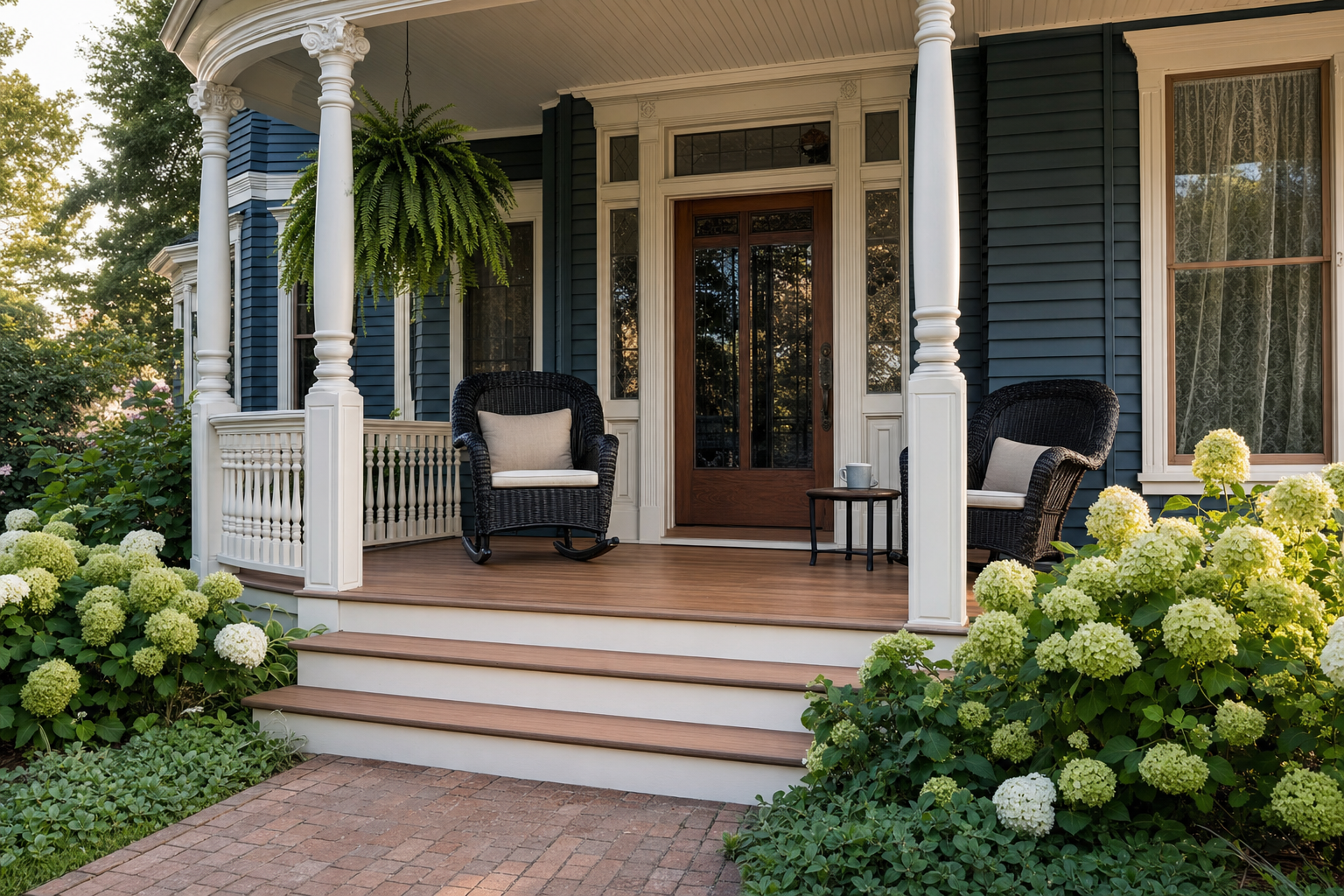
The siding on this home is a deep slate navy. The trim is bone white. Black wicker furniture lives on the porch year-round. In that palette, a warm honey-amber tone reads as wood without competing with the siding. Tuscany is one of six wood-grain colors American Pro extrudes for porch flooring, and on this house it does the work three coats of golden oak stain used to do, only it will still look like that in 2046.
How it ties into the trim
The porch ceiling stays painted wood T&G. The columns, balustrade, and skirt stay white. The new PVC floor reads as the warm horizontal plane between the white architecture above and the brick walkway below. That is the only thing on a Victorian front porch that ever should have been a wood tone. Everything else is paint.
The install
Crew took two days. Day one was demolition (carefully, because the porch is on the front of a designated historic home and the spindles and balustrade had to come off and go back on), joist sistering where settling had pulled the run out of pitch, and a fresh skim of self-leveling compound on top of the structural blocking. Day two was lay the new floor.
Tongue-and-groove boards run perpendicular to the house, depth-wise, so any water that does make it onto the porch is gravity-fed toward the front edge. Boards are face-fastened with stainless trim screws at every joist, plugs filled with a color-matched putty so the screw heads disappear into the grain. The first board against the house is ripped down 1/2" to give the porch room to breathe with seasonal temperature swings (PVC has a small but real coefficient of thermal expansion and the install detail respects it).
What it looks like at golden hour
The photograph at the top of this post was taken about an hour before sunset. The hydrangeas were a separate planting project, but they made the shot. What you are looking at is a porch that reads as 1908 from twenty feet away, and as 2026 the moment you set a cup of coffee down on it and notice the board edges are still razor-sharp. That is the trade. The visual language of a wood porch with none of the maintenance that came with one.
The homeowners' first comment after the crew left was that the porch sounded different underfoot. A wood porch creaks. This one does not. They are still deciding whether they miss the creak.