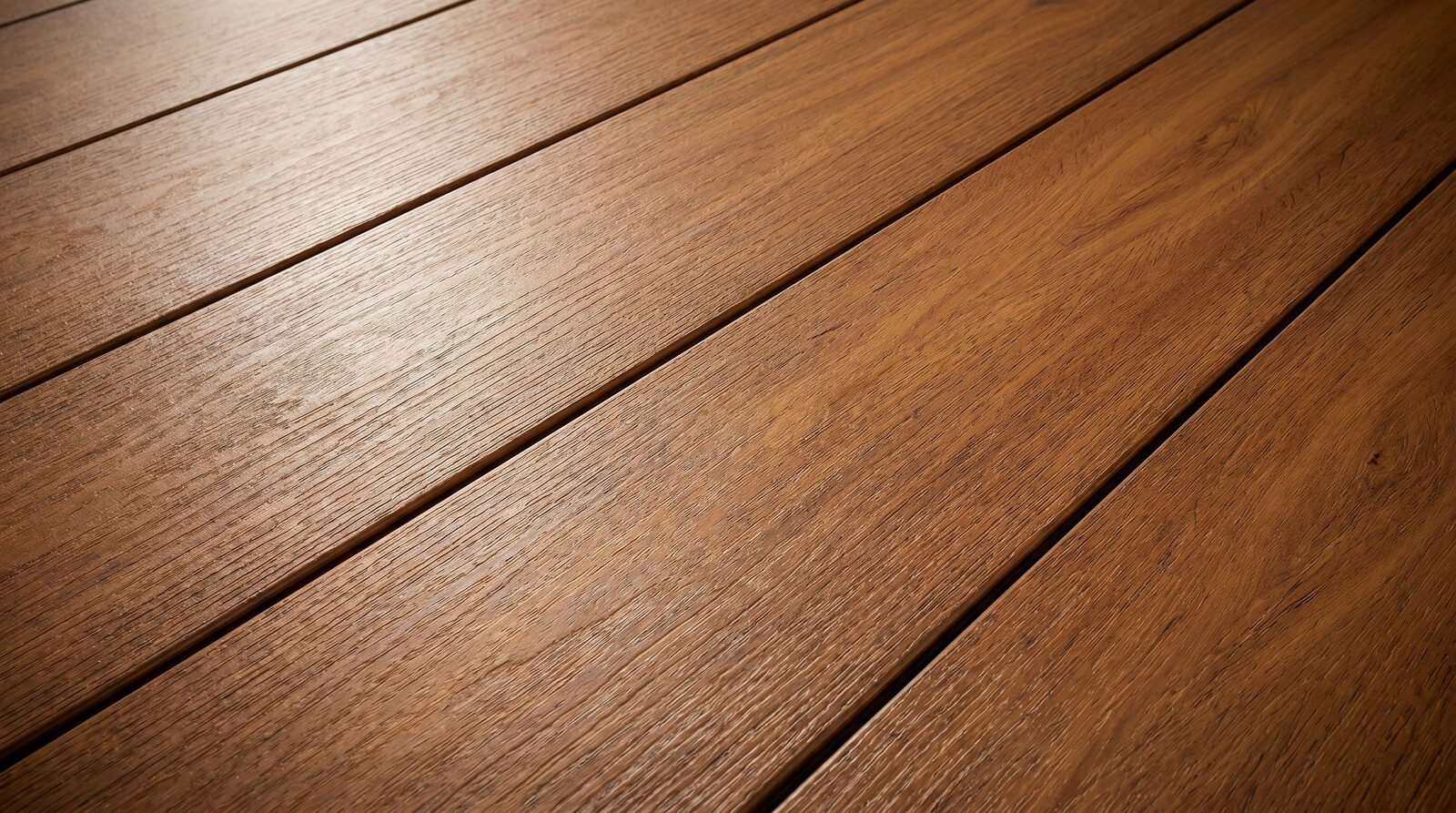
Best PVC decking:
how to actually compare it.
Already sold on PVC and comparing premium lines? This buyer's guide shows you the six things that separate the best cellular PVC decking: cap chemistry, core, surface construction, warranty, fastening, and where it's made. No brand hype, just the categories that matter.
The best PVC decking pairs a moisture-resistant cellular PVC core with a weatherable ASA cap, a realistic surface, strong fade and structural warranties, and hidden-fastener compatibility. Compare premium lines on those categories rather than on logos, and the differences become clear.
American Pro offers two premium cellular PVC lines built on the same core: TrueGrain Deck (laminated hardwood-grain surface) and Legacy PVC Decking (solid-color, subtle grain). Both are extruded by Patwin Plastics in Linden, NJ, and carry a 25-year limited residential warranty.
Premium PVC vs
the alternatives.
Short answer: premium cellular PVC leads on moisture immunity, heat, and warranty. Here is how the categories line up against composite and wood.
| What matters | TrueGrain PVC | Other Premium PVC | Capped Composite | Traditional Wood |
|---|---|---|---|---|
| Warranty | 25-yr limited residential surface, 10-yr commercial | Comparable long limited warranties; read fade terms | Long limited terms; fade coverage varies widely | None beyond lumber grade |
| Material composition | Cellular PVC core, co-extruded ASA cap, laminated grain | Cellular or solid PVC; cap chemistry varies | Wood-fiber core under a polymer cap | Solid natural wood |
| Heat resistance | Cool-deck formulation, cooler than dark composite | Generally cooler than composite; varies by cap | Can run hot in dark colors and direct sun | Moderate, but greys and slick when wet |
| Surface texture | Laminated photoreal hardwood grain, capped 4 sides | Embossed or printed grain; realism varies | Embossed grain, can read repetitive | Real grain, but splinters and checks |
| Price tier | Premium | Premium | Mid to premium | Low upfront, high upkeep |
| Maintenance | Soap & water, never sand, stain, or seal | Soap & water | Occasional cleaning; core damage if cap is breached | Sand, stain & seal regularly |
Six things to check
on any premium PVC board.
Short answer: judge the cap, the core, the surface, the warranty, the fastening, and the origin. Everything else is marketing.
1. Cap chemistry and coverage
The cap faces the sun, so its chemistry drives color and gloss retention. ASA (acrylonitrile styrene acrylate) is the chemistry specified for long-term exterior weathering. Confirm the board is capped, and ideally capped on all four sides so every edge is protected.
Look for: a weatherable ASA cap, four-sided coverage.
2. Core construction
A quality cellular PVC core is engineered for stiffness, screw-hold, and moisture resistance, with consistent cell density across every color. No wood fiber means no moisture path at cut ends or fastener holes.
Look for: cellular PVC, consistent density, no wood fiber.
3. Surface: laminated vs solid color
A laminated wood-grain surface gives the most realistic look, with variegated grain that reads across the whole board. A solid-color board with a subtle texture gives a cleaner, classic finish that ages uniformly. Both are valid; pick for the look you want.
Look for: laminated grain for realism, or solid color for classic simplicity.
4. Warranty terms, read in full
Compare both the fade and the structural coverage, residential and commercial, and note how fade is measured (Delta E) and whether coverage is full or prorated over time.
Look for: clear fade and structural terms you can actually read.
5. Fastening options
The best lines support both top-fastening and hidden clips. Look for a profile for each method: a solid edge for face screws and plugs, a standard side groove for the hidden clips you may already stock, and a dedicated profile for a rail-mounted system.
Look for: a profile for each fastening method. American Pro offers three.
6. Where and how it's made
A board extruded, capped, and finished on one domestic line has more consistent chemistry from core to cap. American Pro's boards are made by Patwin Plastics in Linden, NJ, with 50 years of extrusion experience.
Look for: single-line manufacturing and a real extrusion track record.
Keep comparing: PVC vs composite decking, the most realistic wood-look PVC decking, or an ipe wood alternative. Building on Cape Cod specifically? See the best PVC decking for Cape Cod and where it's stocked locally.
Where TrueGrain lands
on the checklist.
Short answer: TrueGrain checks every box, because Patwin controls the core, the cap, and the lamination in one facility.
One line, from compound to cap
Patwin mixes its own PVC compound, extrudes the cellular core, co-extrudes a proprietary ASA capstock, and laminates the decorative wood-grain film, all in Linden, NJ. That vertical control is what keeps cell structure, wall thickness, and the cap-to-core bond consistent across every TrueGrain color.
Cap chemistry, core, and surface all controlled in-house.
Realistic grain, cool surface, hidden fasteners
Six hardwood-inspired colors from weathered grey to deep mahogany Royal IPE, a cool-deck formulation that reflects more solar energy than dark composite, and grooved profiles that pair with the InvisiClip hidden fastener system. Prefer a solid-color classic? Legacy PVC shares the same core.
Premium realism and comfort, with the install flexibility builders want.
Put premium PVC to the test.
Order free 6-inch samples to judge the cap, grain, and color in your own light, or lay TrueGrain onto a photo of your deck in the 3D Deck Builder before you commit.
Choosing the
best PVC board.
The questions PVC-aware shoppers ask most when comparing premium lines.
What makes the best PVC decking?
The best PVC decking combines a moisture-resistant cellular PVC core, a weatherable cap (ASA is the chemistry specified for long-term exterior color hold), a realistic surface, a strong fade and structural warranty, and hidden-fastener compatibility. Origin matters too: a board extruded and finished on one domestic line, like American Pro's TrueGrain and Legacy PVC made by Patwin Plastics in Linden, NJ, gives you consistent chemistry from core to cap.
How do I compare premium PVC decking?
Compare premium PVC decking on six things: cap chemistry (look for weatherable ASA), core construction (cellular PVC with consistent density), surface (laminated wood-grain versus solid-color texture), warranty (fade and structural terms, residential and commercial), fastening options (top-fasten and hidden-clip), and where and how it is made. Judging categories rather than logos keeps the comparison objective.
What is the difference between TrueGrain and Legacy PVC decking?
Both share the same cellular PVC core and extrusion line. TrueGrain Deck is capped cellular PVC with a laminated, photoreal hardwood-grain surface in six hardwood-inspired colors. Legacy PVC Decking is solid-color UV-stabilized cellular PVC with a subtle wood-grain texture in six classic colors. Choose TrueGrain for premium hardwood realism and Legacy for a clean, classic finish. Both carry a 25-year limited residential warranty.
Why does the cap chemistry matter on PVC decking?
The cap is what faces the sun, so its chemistry drives color and gloss retention. ASA (acrylonitrile styrene acrylate) is the chemistry specified for long-term exterior weathering, which is why premium PVC decking uses an ASA capstock. American Pro co-extrudes its own ASA cap on every board and caps all four sides so every edge is protected.
Is PVC decking made in the USA better?
Domestically made PVC decking offers more consistent chemistry and supply when the core, cap, and finish are produced on one line. American Pro's TrueGrain and Legacy PVC are extruded by Patwin Plastics in Linden, New Jersey, which has 50 years of extrusion experience and mixes its own compound and cuts its own tooling, so cell structure and the cap-to-core bond are controlled in-house.