
A hidden-fastener deck raises a fair question. If there are no screws on the surface, what is holding the boards down when the wind gets under them? (For the wider comparison, see hidden fasteners vs face screwing.) On an exposed deck, a rooftop terrace, or anything near the water, that is not a small question. So we sent InvisiClip™ to an independent lab and had it pulled apart on purpose.
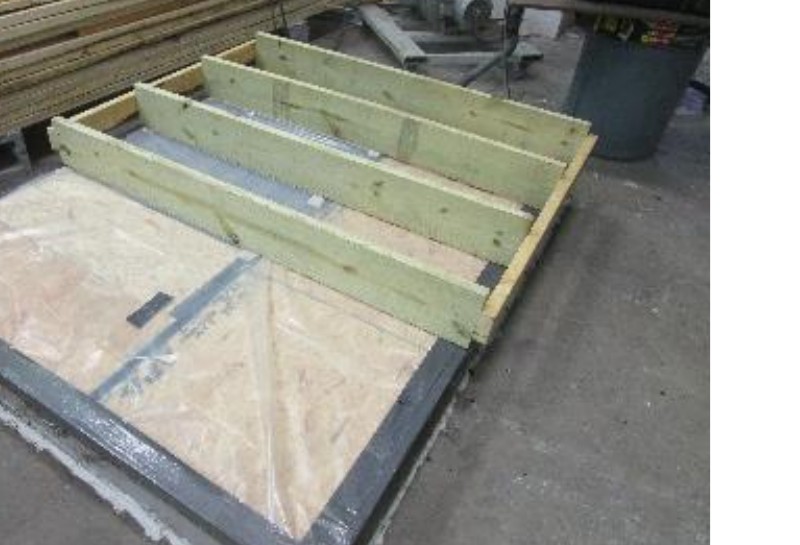
American Pro grooved decking installed with InvisiClip™ was tested by Intertek Building & Construction under the ICC-ES AC174 acceptance criteria, using the ASTM E330 test method for structural performance under uniform static air-pressure difference. Here is what came back, and what the numbers actually mean for a deck you can stand on.
What the numbers say
Uplift is measured in pounds per square foot, or psf. It is the amount of upward pressure the assembly can take before the boards let go of the clips. Across three separate specimens, the InvisiClip™ assembly reached an average ultimate uplift of 306 psf. The sustained figure, 292 psf, is the load it held for a full ten-second hold before the clips released.
For context, wind pressure on a low deck surface in most residential settings is a small fraction of that. These are large margins, and they were achieved with the same clips and the same aluminum rails you would order for any American Pro grooved deck. Nothing in the test assembly was special. That is the point of the test.
Why we tested it at all
InvisiClip™ is powered by the GRAD® system, a hidden-clip platform that has been setting decks in Europe for years. We could have pointed at that track record and left it there. We did not, because our boards are our boards. The groove geometry is extruded on our grooved TrueGrain Deck™ and grooved Legacy PVC decking, and the only honest way to know how our board and this clip behave together is to test the two of them as one assembly.
So that is what the specimen was. American Pro grooved boards, on InvisiClip™ aluminum rails, with the clips engaged in our groove, pulled until something gave. The number belongs to the system, not to a spec sheet borrowed from somewhere else.
What it means on a real deck
The install rules are what turn a lab result into a deck you can trust. On American Pro decking, InvisiClip™ rails sit on top of every joist, running parallel to the joists, at 16 inches on center maximum. One rail per joist. Boards run perpendicular and drop in from above, and the groove catches the cradle on the clip.
That 16-inch spacing is not a suggestion. The uplift performance assumes it. Stretch the joists wider and you are no longer building the assembly that was tested, so the maximum is the maximum. Follow it, and every board on the deck is carried by a clip that was proven to hold far more than the wind will ever ask of it.
The clean deck earns the look. The tested clip earns the trust.
The fasteners themselves are built for the outdoors they live in. InvisiClip™ uses Type 316 stainless steel screws, or hot-dip galvanized class D nails for a nail-gun install, so the hardware under the boards resists corrosion the same way the boards above resist rot. Hidden does not mean forgotten.
The short version
A hidden fastener should look like nothing and hold like everything. InvisiClip™ was pulled to an average of 306 psf by an accredited lab, using our own grooved decking, installed the way we tell every contractor to install it. The surface stays clean because the work is happening underneath, and now there is a report that says exactly how much work it can take.