Composite too hot?
Meet the cooler board.
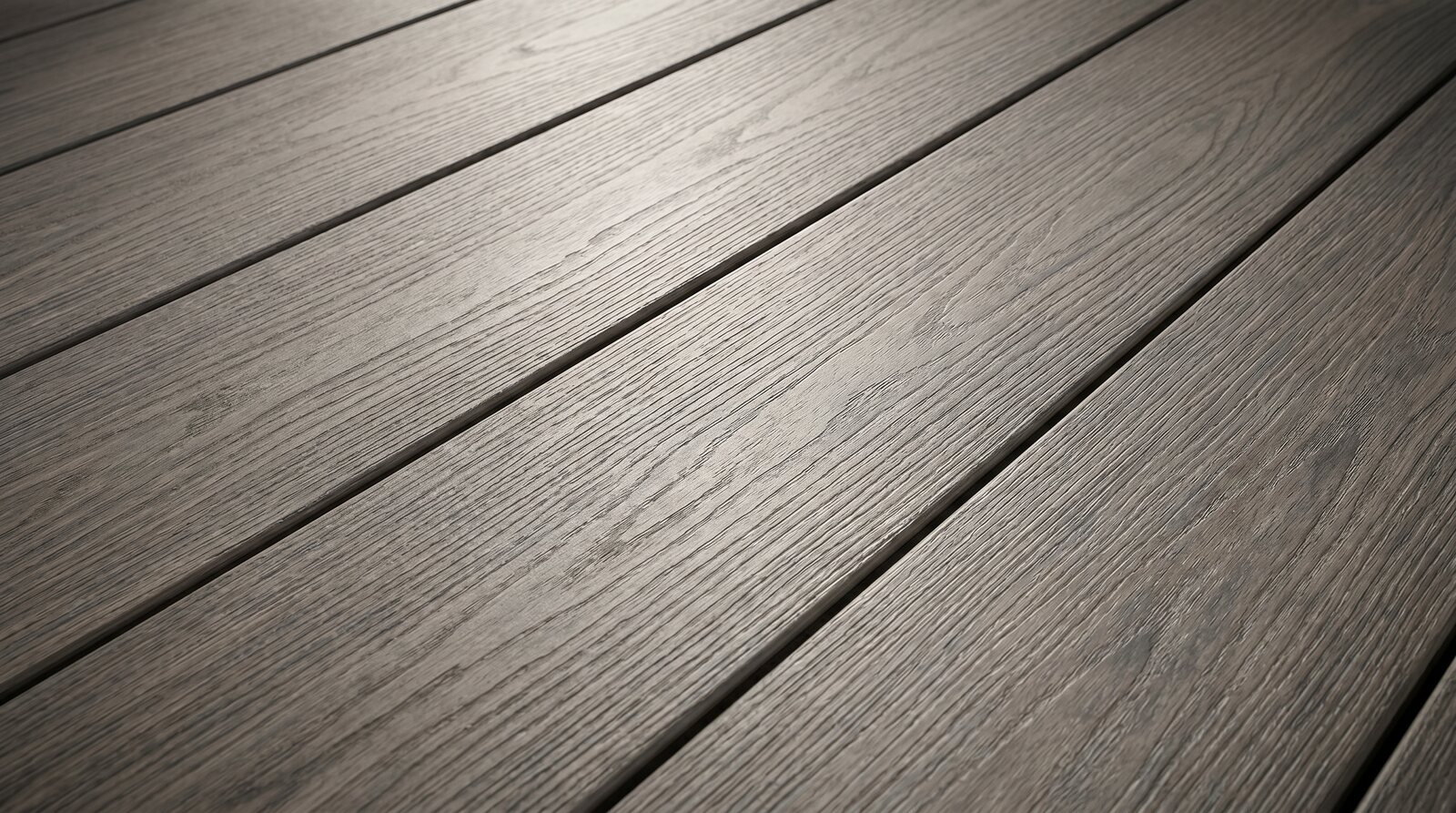
If your capped composite deck is too hot to walk on barefoot, or you want the composite look without the wood fiber, TrueGrain capped cellular PVC is the alternative. Cooler underfoot, no wood core to swell or stain, and a realistic hardwood-grain surface.
If capped composite runs too hot or you want to skip the wood fiber entirely, capped cellular PVC is the alternative. Composite still has a wood-fiber core under its cap, which can absorb moisture if the cap is breached and, in dark colors, can get uncomfortably hot in direct sun.
TrueGrain Deck is capped cellular PVC with a laminated hardwood-grain surface and a cool-deck formulation that reflects more solar energy than dark composite. No wood fiber, no moisture path, six hardwood-inspired colors, and a 25-year limited residential warranty. Made in the USA.
TrueGrain PVC vs
capped composite.
Short answer: TrueGrain matches composite on looks and beats it on heat and moisture, because there is no wood fiber in the board.
| What matters | TrueGrain PVC | Capped Composite | Traditional Wood | Other Premium PVC |
|---|---|---|---|---|
| Warranty | 25-yr limited residential surface, 10-yr commercial | Long limited terms; fade coverage varies widely | None beyond lumber grade | Comparable long limited warranties |
| Material composition | Cellular PVC core, ASA cap, laminated grain, no wood fiber | Wood-fiber core under a polymer cap | Solid natural wood | Cellular or solid PVC, no wood fiber |
| Heat resistance | Cool-deck formulation, cooler than dark composite | Dense and pigmented; can run hot in dark colors | Moderate, but greys and slick when wet | Generally cooler than composite; varies by cap |
| Surface texture | Laminated photoreal hardwood grain, capped 4 sides | Embossed grain, can read repetitive | Real grain, but splinters and checks | Embossed or printed grain, varies by line |
| Price tier | Premium | Mid to premium | Low upfront, high upkeep | Premium |
| Maintenance | Soap & water, never sand, stain, or seal | Occasional cleaning; core damage if cap is breached | Sand, stain & seal regularly | Soap & water |
Why composite gets hot,
and PVC stays cooler.
Short answer: dark, dense composite absorbs solar energy, while a reflective PVC cap sends more of it back. Color choice matters in any material.
Heat underfoot
Capped composite is dense and heavily pigmented, so dark colors soak up solar energy and can get uncomfortable for bare feet and pets in direct afternoon sun. TrueGrain's cool-deck formulation reflects more of the solar spectrum than dark composite, and lighter TrueGrain colors run noticeably cooler in full sun.
Verdict: for a cooler surface, choose a reflective cap and a lighter color.
Moisture and the cap
A composite board's polymer cap protects the surface, but the core is still wood fiber. Cut it, drill it, or nick the cap, and the exposed core can take on water, which can lead to swelling or staining. Cellular PVC has no wood fiber anywhere, so a cut end or a fastener hole has nothing to absorb moisture.
Verdict: no wood fiber means no moisture path, even at cuts and fasteners.
Want the full picture? Compare PVC vs composite decking overall, read the cellular PVC decking guide, or see the most realistic wood-look PVC decking.
The composite look,
the PVC advantage.
Short answer: TrueGrain gives composite shoppers the realistic grain they want on a cooler, moisture-immune cellular PVC board.
Laminated hardwood grain, capped four sides
TrueGrain Deck laminates a photoreal, variegated wood-grain surface over a weatherable ASA cap and a moisture-resistant cellular PVC core, sealed on all four sides. The grain reads across the whole board instead of repeating like an embossed composite texture, in six colors from weathered grey to deep mahogany Royal IPE.
Premium composite realism, on a board with no wood fiber.
Built by Patwin, pairs with InvisiClip
Every board is extruded by Patwin Plastics in Linden, NJ, with 50 years of extrusion experience. TrueGrain comes in three profiles: Solid Edge for face screws and color-matched plugs, Grooved Edge for standard hidden clips, and Grooved for InvisiClip for the InvisiClip hidden fastener system and a clean, screw-free surface.
American-made, hidden-fastener ready, engineered to last.
Hold a cooler board in your own hand.
Order free 6-inch samples to compare the grain and surface against your current composite, or preview every TrueGrain color on a photo of your deck in the 3D Deck Builder.
Cooler than
composite?
The questions composite shoppers ask most about heat, moisture, and switching to PVC.
Why is my composite decking so hot to walk on?
Composite decking gets hot because it is dense and pigmented, and darker colors absorb more solar energy. In direct afternoon sun a dark composite surface can become uncomfortable for bare feet and paws. A cooler alternative is cellular PVC with a heat-reflecting cap: TrueGrain uses a cool-deck formulation that reflects more solar energy than dark composite, so lighter colorways stay more comfortable.
Is there a decking that stays cooler than composite?
Yes. Cellular PVC decking with a reflective cap generally stays cooler than dark capped composite. TrueGrain Deck's cool-deck formulation reflects more of the solar spectrum than dark composite, and its lighter hardwood-inspired colors run noticeably cooler underfoot than dark boards in full sun. Color choice matters: lighter tones always run cooler than dark ones in any material.
What is a good alternative to capped composite decking?
Capped cellular PVC is the closest wood-look alternative to capped composite, and it removes the wood fiber that composite still contains. TrueGrain Deck delivers a realistic laminated hardwood-grain surface over a moisture-resistant cellular PVC core, so it won't absorb water, swell, or stain the way composite can if its cap is breached, and it typically runs cooler underfoot.
Does capped composite still absorb moisture?
A polymer cap protects most of a composite board, but composite still contains a wood-fiber core. If the cap is cut, drilled, or damaged, the exposed core can absorb moisture, which can lead to swelling or staining. Cellular PVC has no wood fiber anywhere in the board, so a cut edge or fastener hole has nothing to absorb water.
Does TrueGrain look as realistic as composite?
TrueGrain uses a laminated, photoreal wood-grain surface that reads across the whole board rather than repeating like an embossed composite texture. It comes in six hardwood-inspired colors and is designed to match or exceed the realism of premium capped composite while behaving like cellular PVC underneath.