Built for salt air,
sand, and sun.
Salt air rots wood and rusts fasteners, blowing sand scours finishes, and reflected UV bakes an open lot all day. TrueGrain cellular PVC decking has no wood fiber to swell and no finish to peel, so it holds up where beach house decks take the most abuse.
The best decking material for coastal homes is cellular PVC, because it has no wood fiber to absorb salt moisture and rot. TrueGrain and Legacy PVC decking are 100% PVC with a weatherable ASA cap, so salt air, fog, and sand have nothing organic to break down.
Unlike wood, there is no annual oiling and no greying to fight; unlike wood-composite boards, there is no fiber core to swell if the cap is breached at a cut end. Add the cool-deck formulation and it stays comfortable underfoot on a sun-soaked oceanfront deck. Made in the USA by Patwin Plastics, backed by a 25-year limited residential warranty.
Coastal deck materials,
compared.
Short answer: on the coast, the material with no wood fiber wins. Here is how cellular PVC compares to the alternatives in salt air.
| What matters on the coast | TrueGrain PVC | Capped Composite | Traditional Wood | Other Premium PVC |
|---|---|---|---|---|
| Warranty | 25-yr limited residential surface, 10-yr commercial | Long limited terms; fade coverage varies widely | None beyond lumber grade | Comparable long limited warranties |
| Material composition | 100% cellular PVC, ASA cap, no wood fiber | Wood-fiber core under a polymer cap | Solid wood, cedar or tropical hardwood | Cellular or solid PVC, no wood fiber |
| Salt-air & moisture | Nothing organic to rot; won't swell or streak | Core can swell if cap is breached at cuts | Rots, checks, and greys without constant care | Resists moisture; performance varies by cap |
| Heat resistance | Cool-deck formulation, reflects more solar energy | Can run hot in dark colors and direct sun | Runs hot; slick and splintery when wet | Generally cooler than composite; varies by cap |
| Surface texture | Laminated woodgrain, coastal greys to warm walnut | Embossed grain, can read repetitive | Real grain, but splinters over time | Embossed or printed grain, varies by line |
| Maintenance | Soap & water, never sand, oil, or seal | Occasional cleaning; can stain or fade early | Sand, seal, and re-oil on a schedule | Soap & water |
What salt air does,
and what it can't.
Short answer: the ocean attacks organic material and metal. Cellular PVC gives it nothing to work on.
No wood fiber means no rot, no swell
Salt moisture and coastal humidity feed rot and mildew in wood and can wick into a wood-composite core wherever the cap is cut or drilled. TrueGrain is 100% cellular PVC through and through, so a cut end at a stair or picture-frame border is just as moisture-proof as the face of the board. Pair it with stainless fasteners or the hidden InvisiClip system and the whole assembly is salt-air ready.
Verdict: nothing for the ocean to rot, swell, or streak.
Holds color under relentless coastal UV
Open coastal lots get intense, water-reflected sun that greys untreated wood in a season. TrueGrain's weatherable ASA cap carries a 25-year limited residential warranty against abnormal color change beyond 2 Delta E, full coverage years 1 through 5 and prorated thereafter. Weathered-grey tones like Coastal Driftwood and New England Birch even lean into the classic seaside look, without the fading.
Verdict: the coastal palette you want, engineered to stay put.
Cool underfoot for barefoot beach days
A deck between the house and the beach gets walked barefoot all summer. TrueGrain's cool-deck formulation reflects more solar energy than dark composite, so lighter coastal colors stay more comfortable in direct sun. Want the full picture on heat? See how it compares to a capped composite deck that runs hot.
Verdict: a barefoot-friendly deck, even on an exposed lot.
Coastal dealers & local guides: PVC decking on Cape Cod, Nantucket, and Martha's Vineyard. Keep comparing: PVC vs composite decking, the cellular PVC decking guide, or how to compare premium PVC decking.
Made for the
shoreline.
Short answer: TrueGrain was engineered for the exact conditions a beach house deck faces every day.
A weathered-coastal palette that never greys out
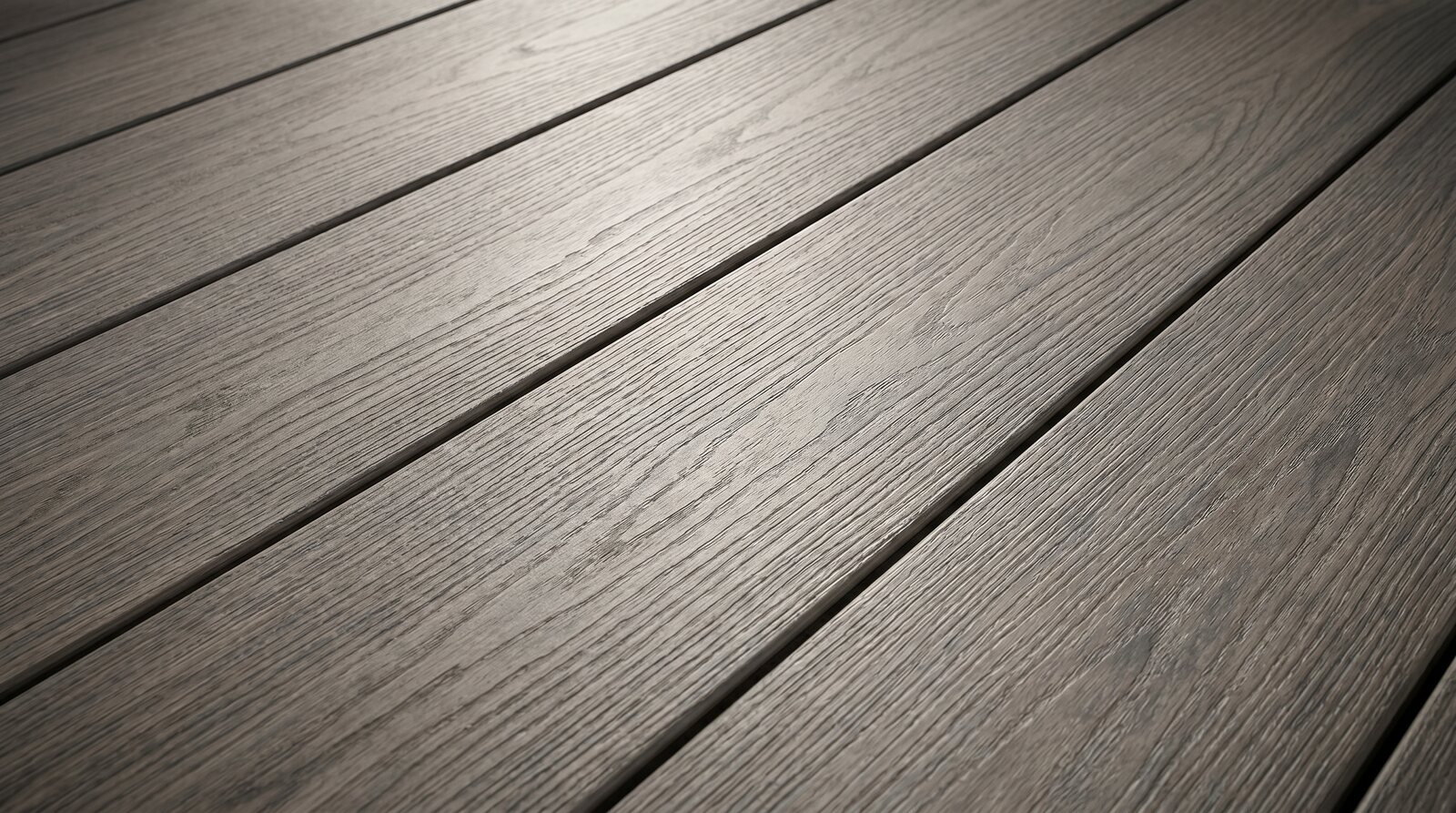
Coastal Driftwood (soft warm grey) and New England Birch (weathered silver-grey) capture the classic seaside driftwood look, while Aged Oak, Embered Taupe, Tropical Walnut, and Royal IPE cover warmer, richer tones. All six are laminated woodgrain, so you get the coastal aesthetic without watching real wood silver unevenly.
Six coastal-ready colors, all upkeep-free.
American-made and built to a marine-tough spec
Every board is extruded by Patwin Plastics in Linden, NJ, with 50 years of extrusion experience serving demanding East Coast markets. The Grooved for InvisiClip profile pairs with InvisiClip hidden fasteners for a clean, screw-free surface, and prefer a solid-color classic? Legacy PVC Decking shares the same salt-air-proof cellular core. Not sure PVC is right? Start with the most realistic woodgrain PVC decking overview.
The coastal deck you want, engineered to outlast the salt.
Test a sample against your coastal light.
Order a free 6-inch TrueGrain sample to see how the coastal greys and warm woodgrains read against the water and sky at your place, or preview your beach house deck in the 3D Deck Builder.
Coastal decking,
answered.
The questions beach and oceanfront homeowners ask most about deck material.
What is the best decking material for coastal and beach homes?
The best decking material for coastal homes is cellular PVC, because it has no wood fiber to absorb salt moisture and rot. TrueGrain cellular PVC decking will not swell, splinter, or streak the way wood and wood-composite boards can near salt water, it resists blowing sand and constant UV, and its cool-deck formulation stays more comfortable underfoot on a sunny oceanfront deck.
Does salt air damage PVC decking?
No. Salt air does not corrode or degrade cellular PVC the way it attacks wood fasteners and organic wood fiber. TrueGrain is 100% PVC with a weatherable ASA cap, so there is nothing for salt moisture to rot or feed mildew on. Pairing it with stainless fasteners or the hidden InvisiClip system keeps the whole assembly salt-air ready.
Is composite decking good for oceanfront homes?
Capped composite is better than bare wood, but it contains a wood-fiber core. If the cap is ever breached at a cut end or fastener, that core can absorb moisture and swell in a salt-air environment. Cellular PVC has no wood fiber at all, which is why it is the more forgiving choice for oceanfront and beach homes.
Will PVC decking fade in constant coastal sun?
TrueGrain is protected by a weatherable ASA cap and carries a 25-year limited residential warranty against abnormal color change beyond 2 Delta E, full coverage in years 1 through 5 and prorated thereafter. That means it is engineered to hold its color under the intense, reflected UV common on open coastal lots, instead of greying like untreated wood.
Do you have coastal dealers on Cape Cod and the Islands?
Yes. American Pro serves classic New England coastal markets including Cape Cod, Nantucket, and Martha's Vineyard, where salt air, fog, and sun are hard on traditional wood decks. TrueGrain and Legacy PVC decking are stocked through regional dealers so you can match the weathered coastal look without the upkeep of cedar or mahogany.